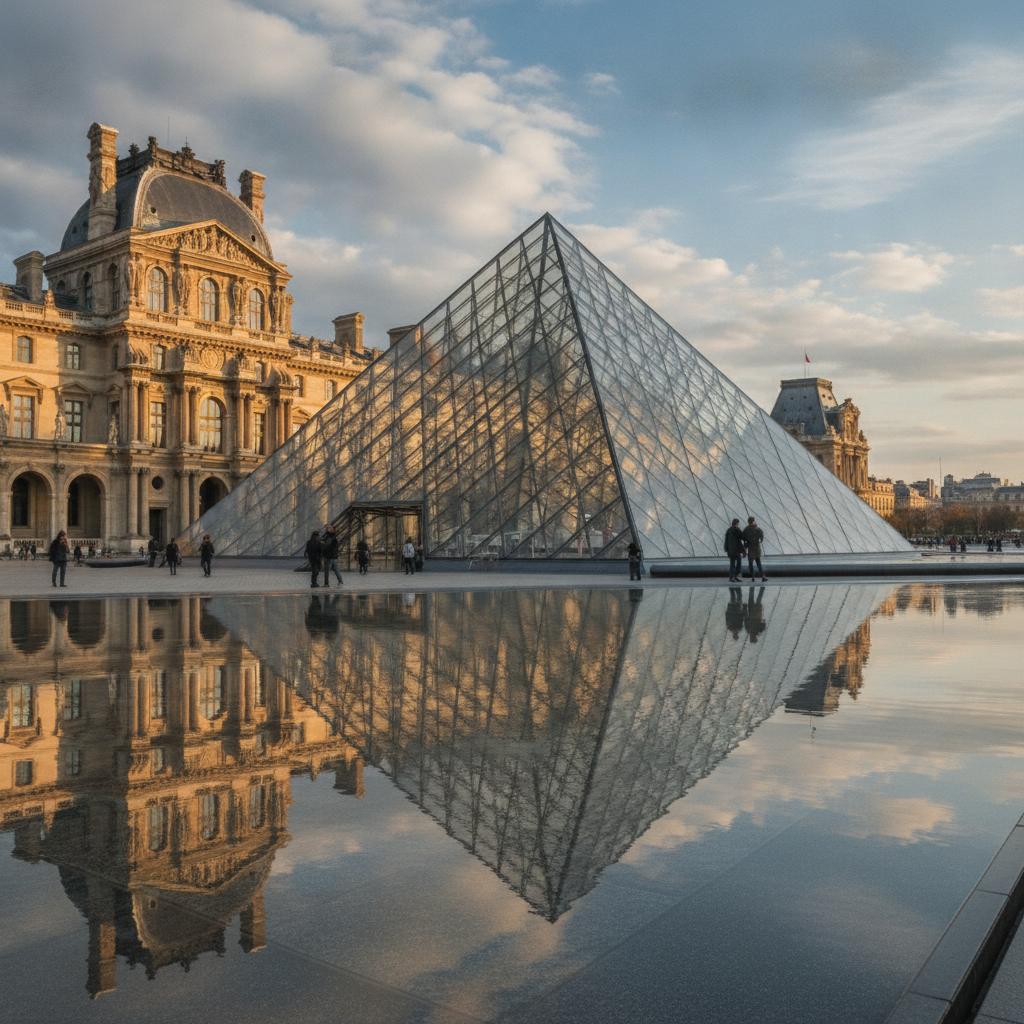
World Museums: Louvre Museum
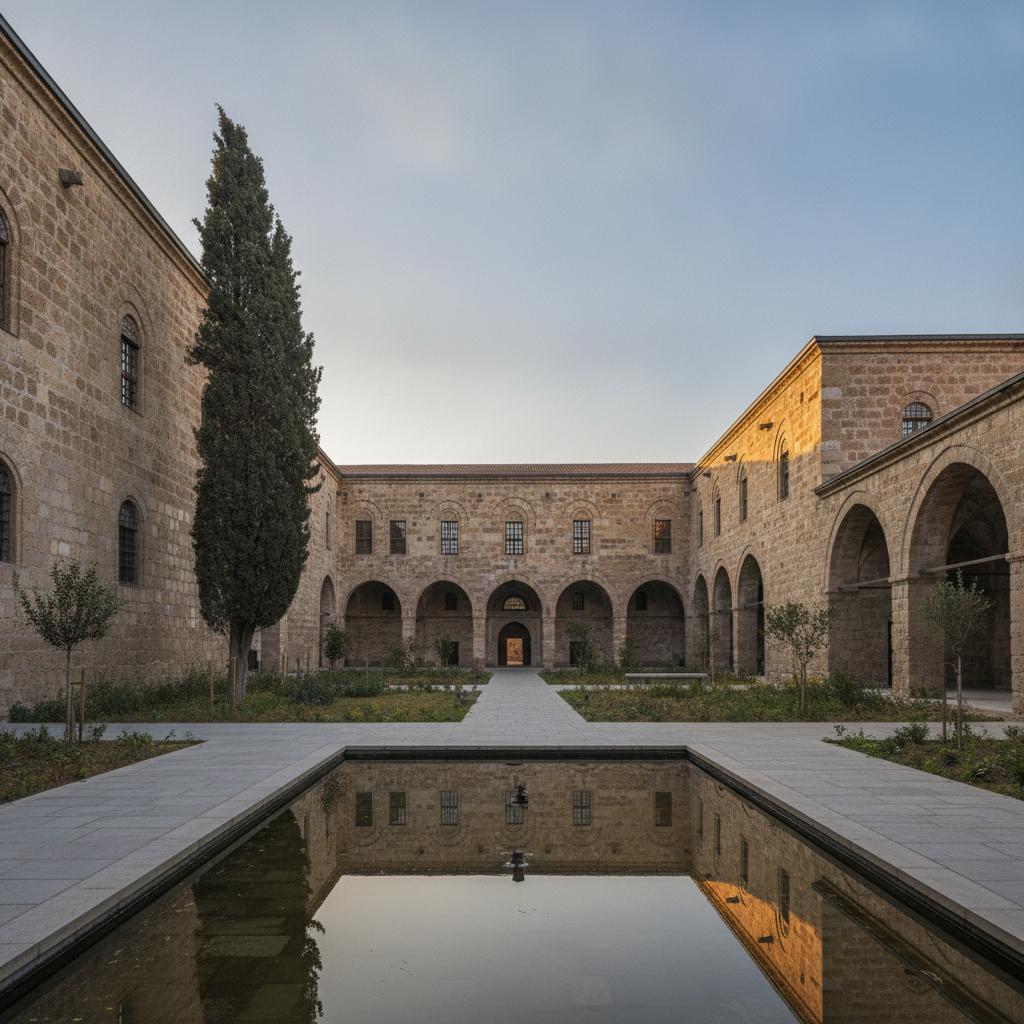
Located in the grand Louvre Palace in Paris, one of the cultural centers of France and Europe, the Louvre Museum is not only the world's most visited art museum, but also a massive monument encompassing eight centuries of history and architectural evolution. The history of the museum begins at the end of the 12th century, when King Philip II ordered the construction of a fortress on the banks of the Seine River to protect the city from Viking attacks. Even today, the remains of the medieval fortress can be seen in the museum's basement levels. Over time, the fortress expanded beyond the city walls, lost its defensive function, and was converted into a royal residence in the 14th century by King Charles V. The Louvre's true transformation as a palace began in the 16th century during the reign of King Francis I, an art lover influenced by the Italian Renaissance, and it was continuously expanded by subsequent kings into today's monumental complex.
When Louis XIV moved his court to Versailles in 1682, the Louvre primarily became a venue where the royal art collection was displayed. During the French Revolution, the National Assembly decided to open these collections to the public, and on August 10, 1793, the Louvre officially opened its doors as a museum showcasing the nation's masterpieces. In subsequent years, the collection was expanded with Napoleon's war spoils, and the museum continuously grew through structural alterations and architectural additions. In the 1980s, the addition of the iconic glass pyramid designed by architect I. M. Pei as part of a modernization project marked a new era in both the Louvre's architectural identity and visitor flow. This pyramid represents a striking synthesis of past and present in the courtyard of the historic palace.
The Louvre's collection spans a wide range from prehistoric times to the 19th century and is divided into eight main curatorial departments: Egyptian Antiquities; Near Eastern Antiquities; Greek, Etruscan, and Roman Antiquities; Islamic Art; Sculptures; Paintings; Prints and Drawings; and Decorative Arts. Out of more than 380,000 works in its collection, the museum presents approximately 35,000 to its visitors across a massive exhibition area of 72,735 square meters.
The greatest factor that makes the Louvre a global icon is undoubtedly the most famous masterpieces of world art that it houses. At the top of the works attracting the most attention from visitors is Leonardo da Vinci's "Mona Lisa" (La Joconde), famous for her enigmatic smile. This portrait of the Italian Renaissance is displayed behind a glass partition in a dedicated room and forms the most crowded spot in the museum. Another monumental masterpiece is the Winged Victory of Samothrace sculpture, dating back to the 2nd century BC and creating a striking effect with its winged figure, and the Venus de Milo, thought to date from 130-100 BC, which is one of the most famous examples of Ancient Greek sculpture.
The depth of the collection is not limited to these famous works. In the Near Eastern Antiquities department, the Code of Hammurabi—a Babylonian legal text dating back to the 18th century BC and holding great importance in terms of human history—draws attention. In the Paintings department, milestones of European art are exhibited, such as other works by Da Vinci, Titian, Veronese's magnificent The Wedding at Cana painting, and Eugène Delacroix's Liberty Leading the People, a symbol of French Romanticism. The Ancient Egyptian and classical period collections also offer a unique richness reaching back to the roots of civilizations, from sphinxes to mummies, sculptures to mosaics.
Far beyond being merely an art repository, the Louvre Museum offers its visitors a seamless journey through different periods of an 800-year architectural heritage and universal art history. The transformations it underwent as a historic fortress, a royal palace, and a temple of art have made it one of the most important and distinguished institutions of world cultural heritage. Impossible to fit into a single day for visitors, this gigantic labyrinth is a treasure chest waiting to be discovered, carrying the trace of a civilization and the breath of an artistic genius in every corner.