Digital Museum Guides with a Gamification Approach and Visitor Engagement Theory
The technological transformation experienced in the field of museum studies has led to the redefinition of visitor profiles and expectations. Visitors, who held the position of passive receivers in the traditional exhibition approach, are transforming into active participants at the center of the process in contemporary museum theories. One of the most effective tools of this transformation is digital museum guides, shaped on the foundation of visitor engagement theory and enriched with gamification principles. While gamification is defined as the use of game elements and mechanics in non-game contexts, it has become a strategic method in the museum environment that enhances visitor learning motivation and spatial engagement.
Gamification on the Basis of Visitor Engagement Theory
Visitor engagement theory examines the depth of cognitive, emotional, and physical connections individuals establish with exhibition spaces. The level of engagement ranges from a superficial stage of paying attention to interacting, internalizing information, and finally establishing a personal connection with the object or subject. Gamification constructs integrated into digital museum guides offer powerful drives to propel visitors up this engagement pyramid. Thanks to guiding tasks and intriguing questions, individuals do not merely walk through the exhibition space, but also become a part of the presented narrative.
Game Mechanics Design in Digital Guides
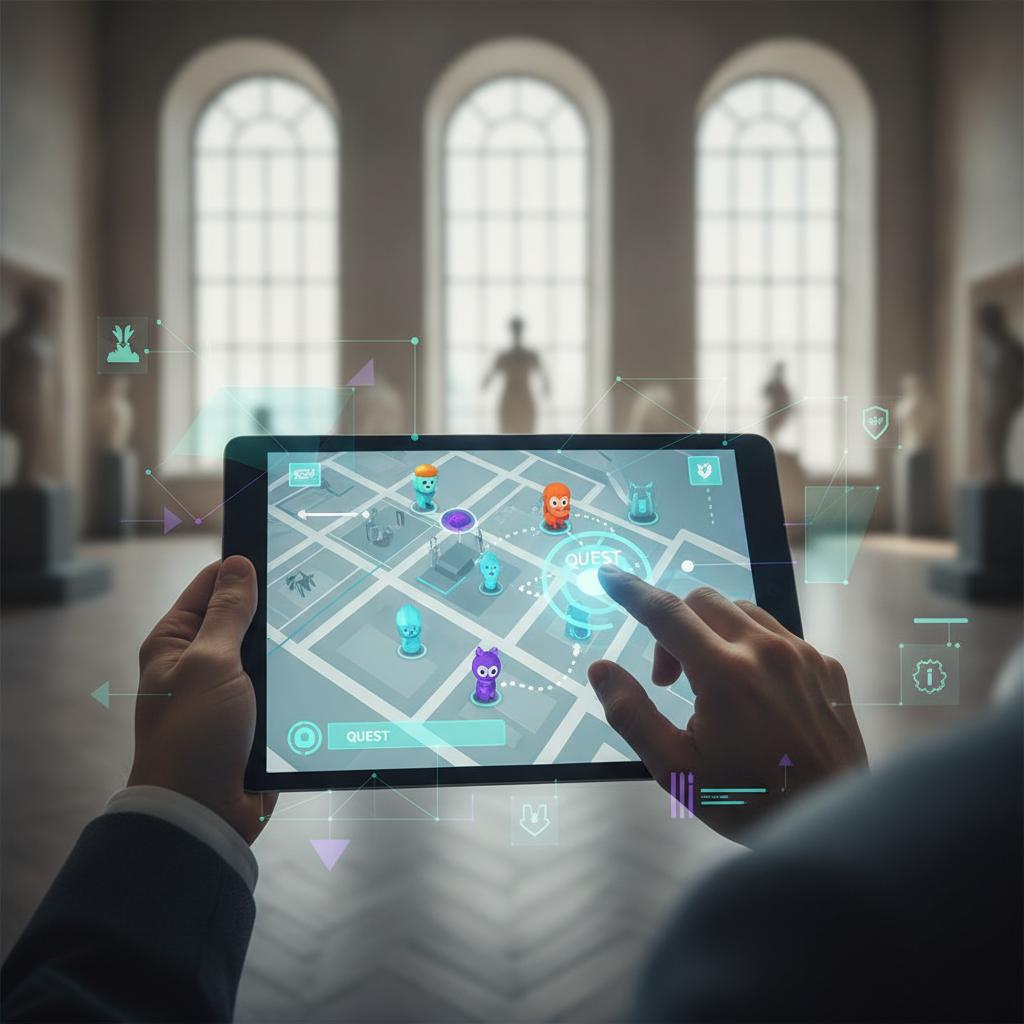
Certain core dynamics must be taken into account when designing gamified digital guides. These dynamics trigger the visitor's desire for discovery:
- Individual Discovery Routes: Allows visitors to follow personalized task chains tailored to their own interests and time constraints.
- Narrative-Supported Scenarios: Keeps the visitor's element of curiosity alive by presenting exhibited themes within the framework of a story arc.
- Instant Feedback Loops: Reinforces motivation through digital rewards, clues, or knowledge badges given at each accomplished step.
Cognitive Connection and Emotional Interaction
According to self-determination theory, the feelings of autonomy, competence, and relatedness must be nurtured for individuals to voluntarily participate in an activity. Gamification elements in digital museum guides offer a sense of autonomy by giving visitors the freedom to chart their own course. Solving puzzles and completing tasks reinforces the feeling of competence, while scenario-based content enables establishing relatedness with the concepts on display.
These game mechanisms used in digital application interfaces directly affect the retention of information and the depth of cognitive processing, beyond merely increasing the visitor's dwell time in the space. The learning process transitions from a mandatory act of reading or listening into a dynamic experience blended with exploration, problem-solving, and a sense of achievement. This situation plays a critical role in making the interest of target groups—especially youth and individuals with high digital literacy—in museum culture sustainable.
Sustainable Engagement and Conclusion
In conclusion, digital museum guides developed with a gamification approach are among the most concrete reflections of visitor engagement theory in the practical field. A well-designed gamification model turns technological innovations into a natural extension of the exhibition narrative. Thus, the museum ceases to be merely a static institution where knowledge is preserved and displayed, turning instead into a dynamic learning space that constantly communicates with its visitors, educates them, and inspires them.