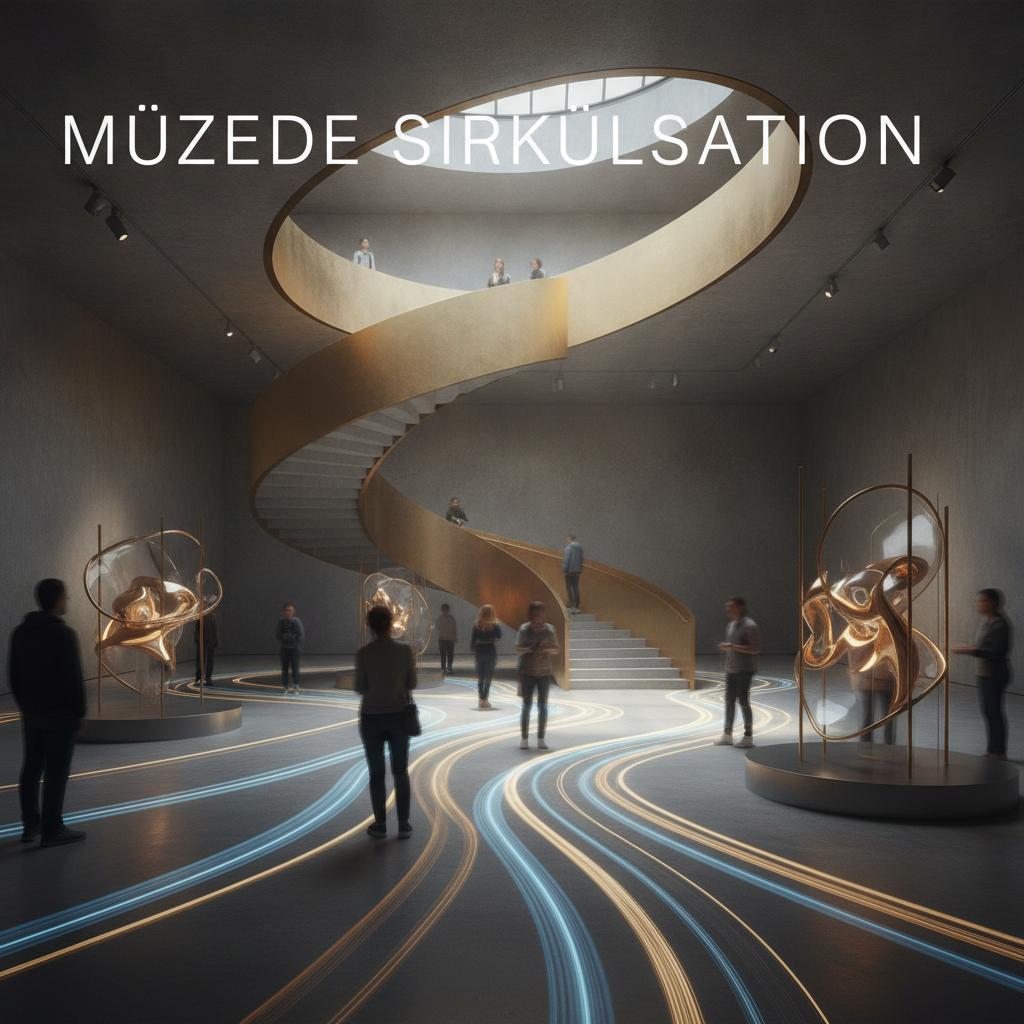
Museum Circulation
Circulation refers to resolving how a visitor should orient themselves from the moment they step into a space until the point they conclude their visit. This orientation should occur seamlessly and without interruption. As in all spaces, circulation is perhaps the very first element that needs to be resolved in museums and all other exhibition areas.
Today, many museums created in Turkey emerge as a result of repurposing historical buildings. While restoring and repurposing historical buildings is certainly a very important development, the greatest problem encountered while converting these structures into museums relates to circulation.
Every museum tells a story to its visitors. Through movable cultural heritage assets as well as reenactments, graphic design, artistic elements, or technological features, museums aim to bring the past to the present and convey historical situations or events to today's people. In doing so, what is being told is, in a sense, stories. Ensuring that every piece of the narrative reaches the visitor will allow this story to be properly perceived and comprehended by them. For this reason, circulation must be resolved so that an exposition plan can be structured accordingly.
Even if an ideal museum or exhibition consists of many sections, everything being conveyed fundamentally completes a single narrative. This narrative naturally follows a specific order and sequence. After entering the building, visitors should be able to follow this sequence without any interruption. The intended message can only be delivered to the visitor in this way. This is precisely where the importance of circulation reveals itself.
If there is any interruption, pause, or especially a bypass in circulation—meaning an unseen area left outside the visit axis—it will not be possible to deliver the message to the target audience, the visitors; as a result, unfortunately, the museum will not be able to properly fulfill its function. Based on all of this, we can confidently assert that the very first issue to address in a building to be converted into a museum must undoubtedly be circulation. The circulation layout creates a foundation upon which the titles in the narrative plan are arranged according to the principles of introduction, body, and conclusion. A proper circulation layout must be established so that the narrative plan, the topics to be addressed, and the spatial layout can be prepared as they should be.