Narrative Techniques in Museums
Spaces and their contents are living organisms that are in constant communication with us and change over time. Museums are no exception to this. Therefore, a museum must be conceived and managed with communication strategies in mind at all stages, from design to maintenance, without forgetting that the work being done is conveying a message.
At their core, all museums are places that convey various messages to visitors—so to speak, tell stories. This applies to history museums as well as art-focused museums. Various messages are presented to visitors in museums through a variety of narrative techniques. Whether a movable cultural asset or a re-enactment area, each conveys its message to the visitor.
In traditional museology, the essence is the collection exhibition. Considering that the roots of museology and museums are based on collecting, this is not surprising at all. Until the 2010s, the main focus of Turkish museology was also based on collection exhibitions. According to this approach, a museum would present at least a portion of the movable cultural assets in its inventory to visitors inside display cases using a highly traditional method, and informative texts about what was displayed were placed in suitable spots on the display cases. In each section of the museum, one or more narrative panels provided information about which civilization, ancient city, or culture that area was dedicated to.
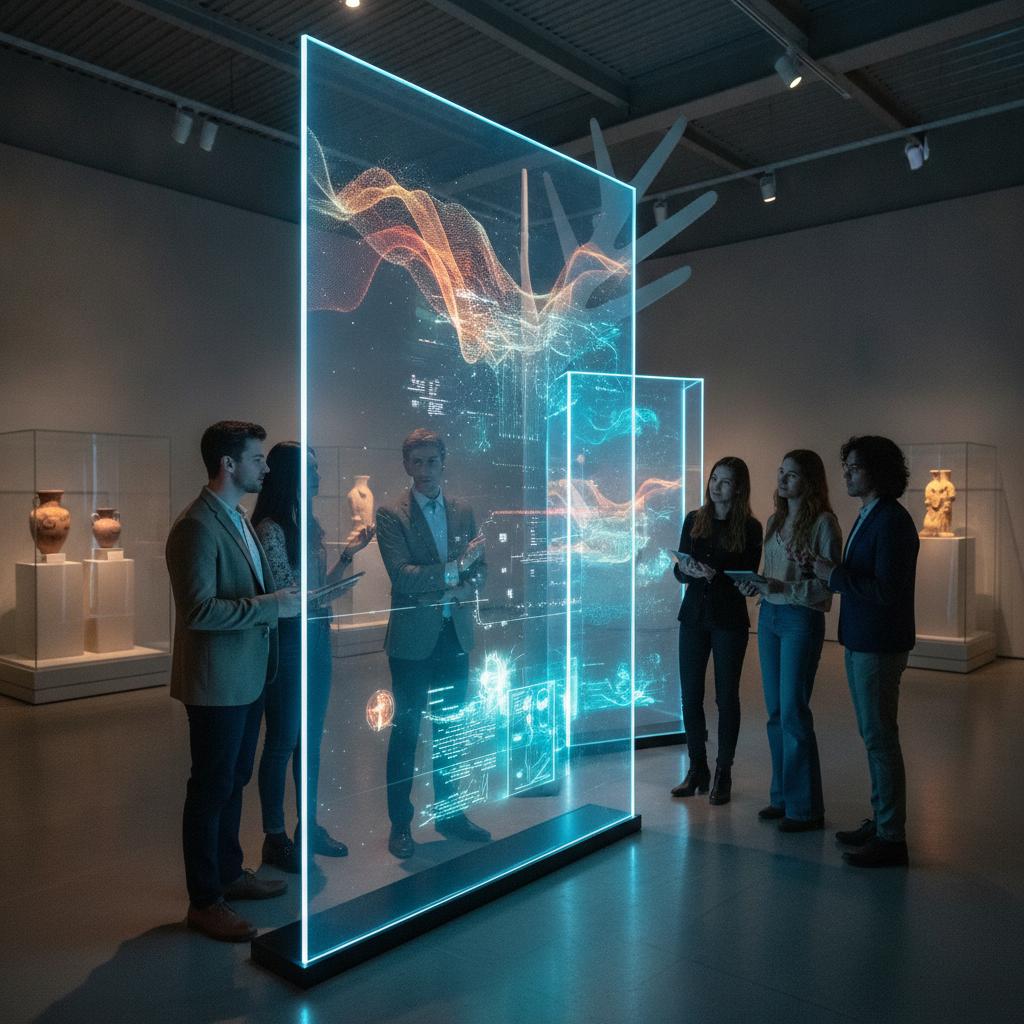
Particularly starting from the second half of the 2000s and into the 2010s, with the widespread adoption of city museums, we see that narrative techniques and styles began to change and diversify. New examples that were previously either never implemented or rarely seen—such as re-enactment areas made with silicone sculptures, applications trying to elevate the visitor experience through digital methods, and even techniques appealing to the sense of smell in certain sections—began to become increasingly common from these periods onward.
Today, the structure we call a museum has taken on a character that gains importance not only through collection exhibitions but also through display techniques, incorporating various narrative styles. In addition to the collection itself, narrative techniques have now come to the fore in museums through both artistic elements and digital methods. Making museums attractive spaces, especially for new generations, and preventing them from being static structures is possible through the implementation of such different narrative techniques.