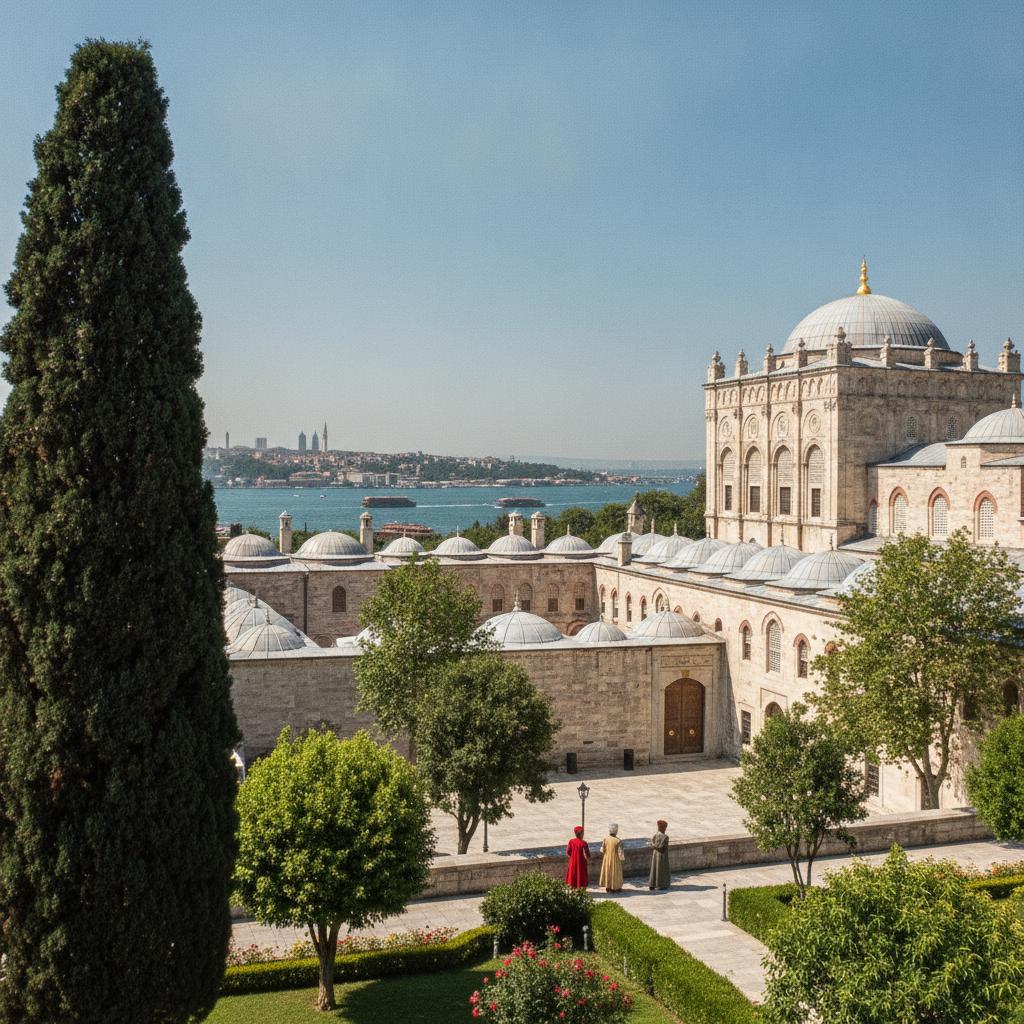
TOPKAPI PALACE MUSEUM: THE HEART OF THE OTTOMAN EMPIRE滑动
The Topkapı Palace Museum is one of Turkey's most important historical and cultural heritages. Serving as the administrative center of the Ottoman Empire for nearly four hundred years, this majestic palace is among the most visited museums in the world today. Located at a unique point on Istanbul's historical peninsula where the Sea of Marmara, the Bosphorus, and the Golden Horn meet, the palace offers visitors the opportunity to closely experience Ottoman history through both its architectural structure and the artifacts it houses.
Establishment and History: Saray-ı Cedid-i Âmire
The construction of Topkapı Palace began in 1460 by order of the Ottoman Sultan Mehmed the Conqueror, who conquered Istanbul in 1453, and was completed within a few years. In its early periods, the palace was known as "Saray-ı Cedid-i Âmire" or the "New Palace." Expanded over time with additions and arrangements, the palace served as the administrative center of the Ottoman state as well as the residence of the sultans. For nearly four centuries, Ottoman sultans lived here and state affairs were largely conducted from this location.
Palace Architecture and Courtyards
Built over a large area, the palace consists of four main courtyards and numerous structures. The first courtyard is the largest section of the palace and was used as a public area. This courtyard contains various service buildings, warehouses, and workshops. The second courtyard was one of the important centers of state administration. Imperial Council (Divan-ı Hümayun) meetings were held here, and state affairs were discussed. The palace kitchens were also located in the same courtyard, with the capacity to prepare meals for thousands of people.
Enderun and State Administration
The third courtyard is one of the more private sections of the palace and includes areas that offer a closer glimpse into the sultan's daily life. This section features the Audience Hall (Arz Odası), where the sultan received guests, the palace school known as Enderun, and important libraries. Enderun is considered one of the most vital educational institutions that trained administrators for the Ottoman state. The young individuals educated here served at various levels of the state, playing significant roles in the administration of the empire.
Harem: The Mysterious World of Palace Life
One of the most intriguing sections of Topkapı Palace is the Harem. The Harem was the private residence of the sultan's family and is considered one of the most exclusive areas of palace life. Here lived the Valide Sultan (the sultan's mother), the sultan's wives, children, and palace servants. The Harem section contains hundreds of rooms, halls, and corridors. This area is of great importance for understanding the social structure and daily life of Ottoman palace existence.
Republican Era and Museumification
The transformation of the palace into a museum took place under the instructions of Mustafa Kemal Atatürk, the founder of the Republic of Turkey. Opened to visitors as a museum in 1924, Topkapı Palace has attracted intense interest from both local and foreign visitors ever since. The collections exhibited in the palace feature the most distinguished examples of Ottoman art and craftsmanship.
Rich Collections and Sacred Relics
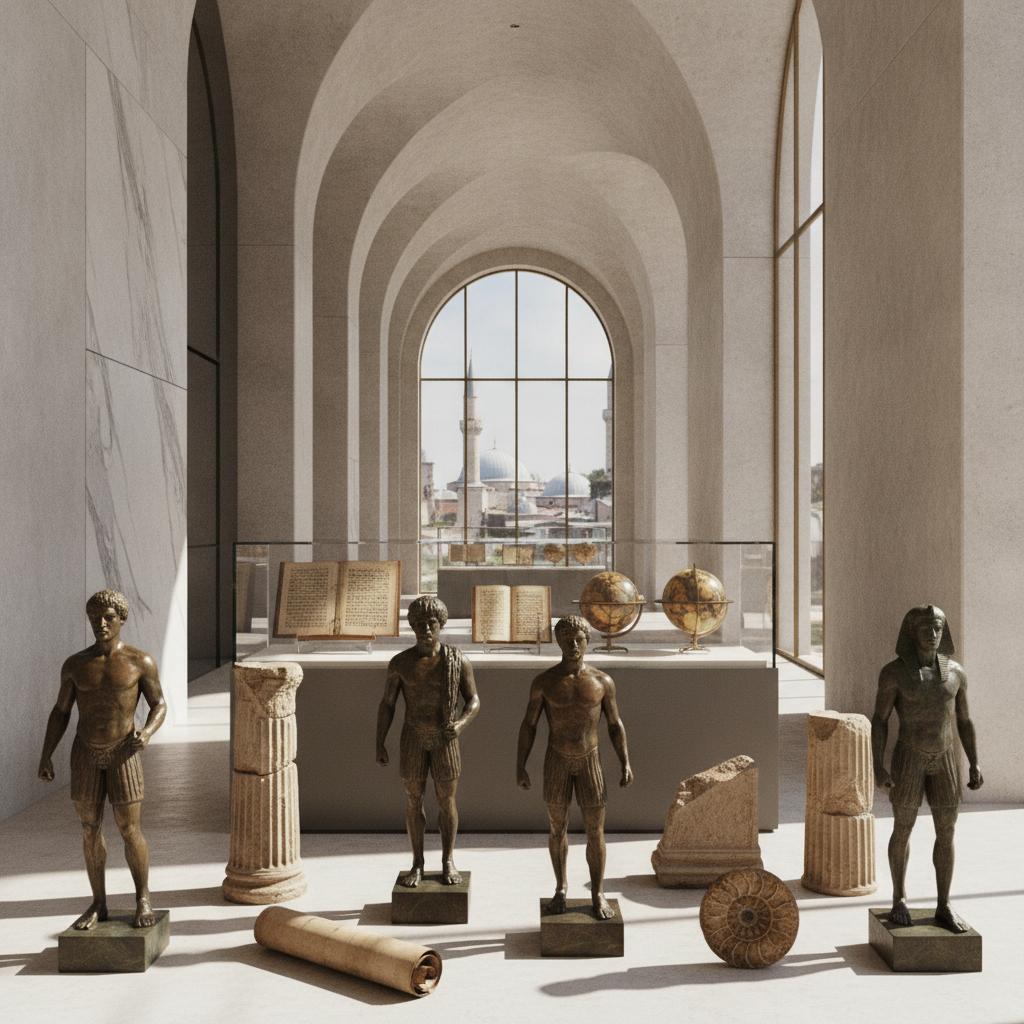
The items exhibited in the Topkapı Palace Museum include valuable jewels, thrones, caftans, weapons, and manuscripts. One of the most striking collections of the palace is the Treasury Department. In this section, objects adorned with precious stones belonging to Ottoman sultans and world-famous jewels are displayed. Additionally, the palace houses a collection of sacred relics. This collection contains religious artifacts of immense importance to the Islamic world and is one of the sections that attracts the most interest from visitors.
Architecture, Gardens, and Cultural Heritage
Topkapı Palace attracts attention not only for its historical artifacts but also for its architecture and gardens. From the terraces of the palace, one can view unique panoramas of the Bosphorus, the Sea of Marmara, and the Golden Horn. This location demonstrates that the palace was built at a strategically and aesthetically significant point. The gardens of the palace were used as resting and entertainment areas during the Ottoman period and continue to offer visitors a peaceful atmosphere today.
Today, the Topkapı Palace Museum stands both as a center reflecting the political and cultural history of the Ottoman Empire and as one of Istanbul's most important tourist destinations. Millions of visitors tour this historical palace every year, finding the opportunity to discover the traces of the past. The palace continues to be a vital part of world cultural heritage as a unique structure that brings the magnificence and rich cultural heritage of the Ottomans to the present day.